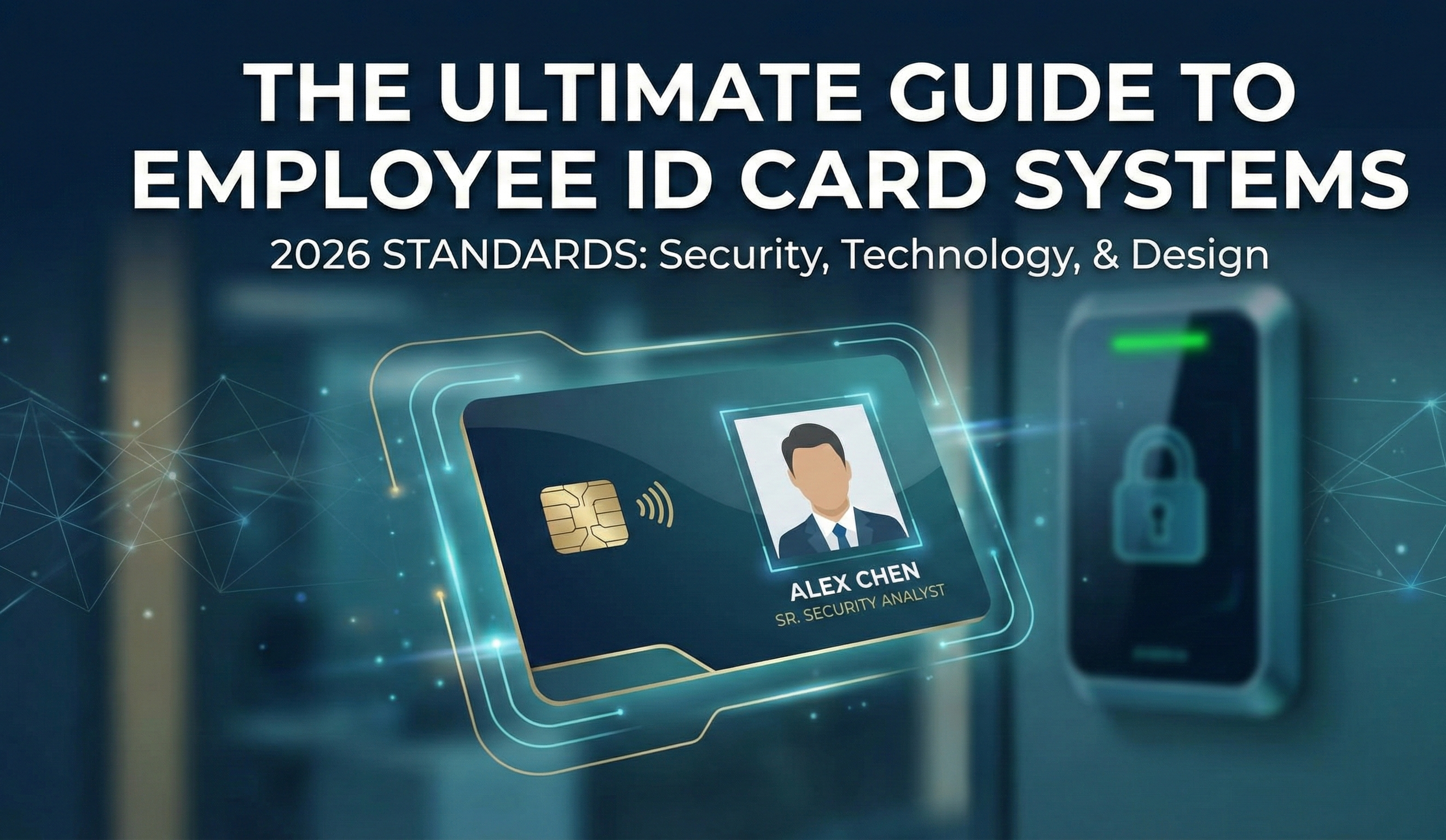
✨ Quick Summary for 2026 Standards
- ✅ Top Security: Dual-layer holographic overlays and Encrypted RFID are now industry requirements.
- ✅ Compliance: Cards must feature high-resolution employee photos and standard expiration dates for liability protection.
- ✅ Efficiency: Same-day local printing reduces "access gaps" when onboarding new hires.
- ✅ Durability: High-grade PVC remains the gold standard for long-term daily badge use.
In an era where workplace security is paramount, a professional employee ID card system is no longer optional—it is a critical component of your company's physical and digital security architecture. This guide explores the latest technology, design best practices, and implementation strategies for 2026.
1. Modern Security Features: Protecting Your Assets
Modern ID systems have moved far beyond simple printed names. To prevent unauthorized access and counterfeiting, businesses are now utilizing multi-factor physical security features.
Encrypted RFID & Smart Chips
Traditional magnetic stripes are easily cloned. RFID (Radio Frequency Identification) and contact smart chips provide encrypted data transmission, ensuring that only authorized personnel can bypass secure entry points. These are essential for companies handling sensitive data or high-value inventory.
Holographic Overlays
A holographic overlay is a transparent layer applied over the card surface. It features light-refracting designs that are nearly impossible to replicate with standard desktop printers. This allows security personnel to verify authenticity with a simple tilt of the card.
2. Comparing Card Technologies
Choosing the right technology depends on your specific office needs. Here is a breakdown of the most common options available today:
| Technology | Best For | Security Level |
|---|---|---|
| Standard PVC | Visual ID Only | Low |
| Magnetic Stripe | Legacy Access Systems | Medium |
| RFID / Proximity | Contactless Office Entry | High |
| Contact Smart Chip | Government & Finance | Ultra-High |
3. Design Best Practices for Maximum Readability
A poorly designed ID card is a security liability. If a security guard or camera cannot clearly identify the person on the badge, the system fails. Follow these design rules:
- High-Contrast Backgrounds: Use light-colored backgrounds for cards with dark text to ensure the information "pops."
- The 10-Foot Rule: Names and titles should be readable from at least 10 feet away.
- Vertical vs. Horizontal: Horizontal cards are standard for wallets, while vertical cards are preferred for lanyards to prevent "badge flip."
"The photo is the most important element of any ID badge. It should be a clear, front-facing headshot with a neutral background, similar to a passport photo."
4. Implementing Same-Day Production
In the modern corporate world, waiting 14 business days for a new hire's badge is unacceptable. It creates a security gap where employees are forced to use "guest passes" or be let in by coworkers. Utilizing a same-day ID card printing service ensures that every employee has their permanent, secure badge on their very first day.
Conclusion
Building a robust employee ID card system involves balancing visual design with high-end security technology. By choosing the right card type and incorporating holographic features, you protect both your staff and your bottom line. Ready to upgrade your company's security? Explore our Studio 360 editor to design your badges today.