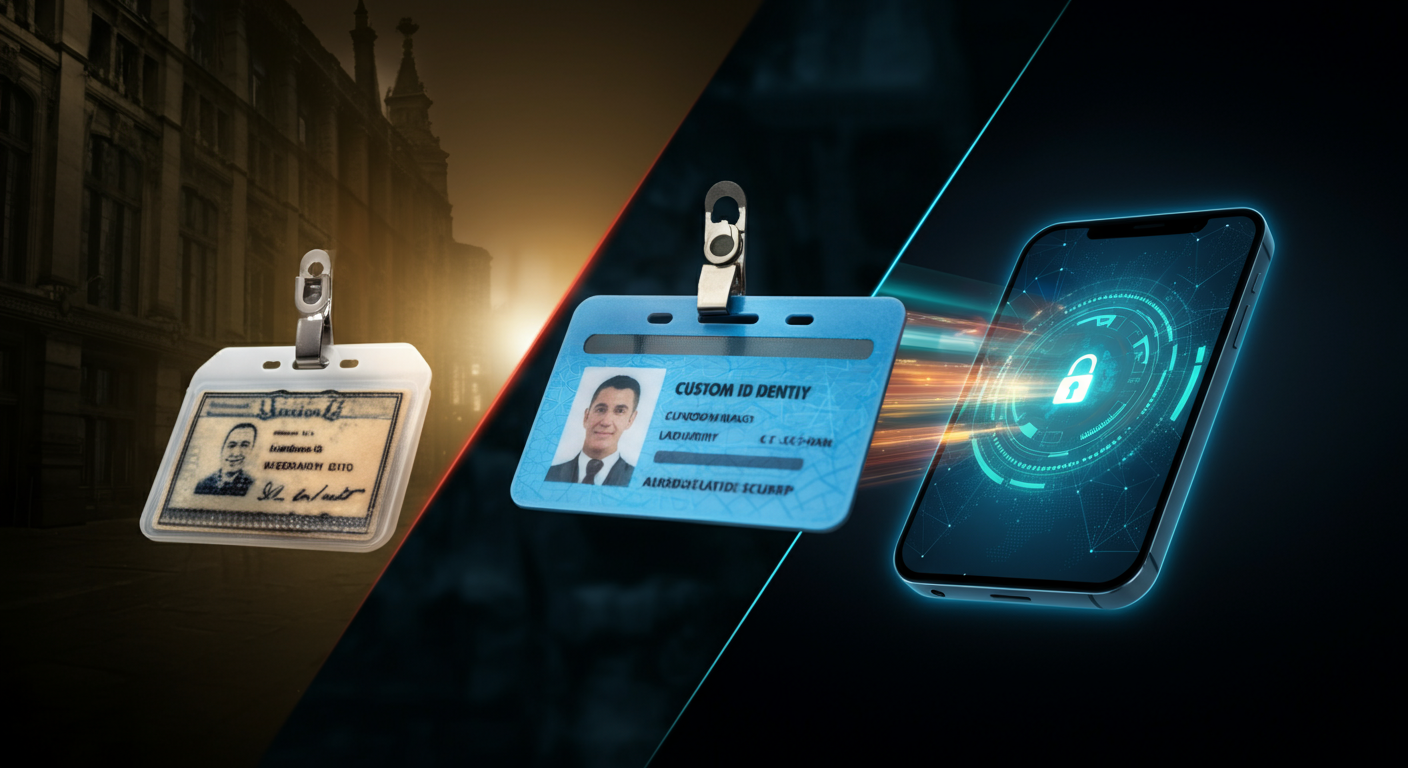
The Evolution of Secure Identity: From Traditional Badges to Same-Day Digital Credentials
In an era defined by rapid technological advancements and evolving security threats, the concept of identity has undergone a significant transformation. What once relied on simple, physical badges has now blossomed into a sophisticated ecosystem of secure, often digital, credentials with the capability for same-day issuance. This comprehensive guide explores the journey of secure identity, highlighting the pivotal shifts and innovations that define its current landscape in 2026.
Key Takeaways
- Traditional physical badges laid the groundwork for modern identity systems.
- Digital transformation has introduced advanced security features and rapid issuance.
- Same-day credentialing is crucial for operational efficiency and immediate security needs.
- The future of identity involves a blend of physical and digital, with an emphasis on robust, adaptable security.
The Foundation: Traditional Physical Badges
For decades, physical identification badges served as the primary method for verifying identity and controlling access in workplaces, schools, and events. These early badges, often laminated cards with a photo and basic information, were a significant step forward from purely visual recognition. They established a clear, tangible link between an individual and their authorized status within an organization.
While effective for their time, traditional badges had limitations. They were susceptible to counterfeiting, easily lost or stolen, and updates required reprinting, leading to delays and administrative overhead. The security features were rudimentary, often relying on visual inspection by guards or receptionists.
The Digital Revolution and Enhanced Security Features
The advent of digital technology revolutionized identity management. The integration of magnetic stripes, barcodes, and later, smart chips (RFID/NFC) transformed ID cards into intelligent credentials. These technologies allowed for automated access control, time tracking, and integration with various digital systems, moving beyond mere visual verification.
Modern custom ID cards now incorporate a formidable array of security features:
- Holographic Overlays: Custom holograms, often embedded with intricate designs, provide a strong visual deterrent against tampering and counterfeiting.
- Microprinting and Nanotext: Text so small it requires magnification to read, making it nearly impossible to replicate with standard printing equipment.
- UV and Infrared Inks: Invisible security features that only become visible under specific light sources, adding a covert layer of protection.
- Guilloche Patterns and Fine Line Designs: Complex, interwoven patterns that are difficult to scan or copy accurately.
- Biometric Integration: Fingerprint or facial recognition data stored on smart chips, offering multi-factor authentication.
- Secure QR Codes: Encrypted QR codes that link to dynamic, verifiable digital credentials.
These features, combined with robust card materials like PVC and composite plastics, ensure durability and resistance to physical alteration.
The Imperative of Same-Day Solutions
In today's dynamic operational environments, the ability to issue secure credentials on the same day has become a critical advantage. Same-day ID solutions address immediate needs and enhance operational agility:
- Rapid Onboarding: New employees, contractors, or students can receive their fully functional ID cards on their first day, ensuring immediate access and productivity.
- Instant Replacements: Lost, stolen, or damaged cards can be replaced within hours, minimizing security risks and operational disruptions.
- Event Management: Facilitating quick and secure access for attendees, temporary staff, and vendors at large-scale events.
- Emergency Situations: Rapid issuance of temporary credentials during crises or unexpected operational changes.
This capability is powered by advanced desktop ID card printers, sophisticated software, and efficient workflows that allow for design, data integration, printing, and encoding in a single, streamlined process.
The Future of Identity: Blending Physical and Digital
Looking ahead, the evolution of secure identity will continue to blend physical and digital realms. While physical ID cards will remain essential for many applications, their integration with digital credentials (e.g., mobile ID apps, blockchain-verified identities) will become even more seamless.
The focus will be on creating highly adaptable, interoperable, and user-centric identity systems that prioritize both security and convenience. Technologies like decentralized identity and zero-knowledge proofs will further enhance privacy and control over personal data, ensuring that individuals can prove who they are without oversharing sensitive information.
Ultimately, the goal is to create an identity ecosystem that is resilient against emerging threats, efficient in its operation, and empowers individuals and organizations with trusted, verifiable credentials.
FAQ
Q: Are physical ID cards still necessary with digital credentials?
A: Yes, physical ID cards remain crucial for many scenarios, especially where digital access might be impractical or where a tangible visual verification is preferred or required by regulation. They often complement digital systems.
Q: How do smart chips in ID cards enhance security?
A: Smart chips can store encrypted data, support multi-factor authentication, and enable contactless access control, making them much harder to clone or tamper with compared to traditional magnetic stripes.
Q: What is the environmental impact of ID card printing?
A: Many providers are now offering eco-friendly card materials, such as recycled PVC or biodegradable plastics, to reduce environmental impact. Efficient printing processes also minimize waste.
Q: Can same-day ID printing handle large volumes?
A: While primarily designed for on-demand and urgent needs, high-capacity same-day printing systems can handle moderate volumes. For very large batch orders, traditional printing methods might still be more cost-effective, but same-day capabilities offer unparalleled flexibility.
Q: How can organizations ensure the privacy of data on ID cards?
A: Organizations should implement robust data encryption for any data stored on smart chips, adhere to data protection regulations (like GDPR or CCPA), and ensure secure handling and disposal of old or expired cards.